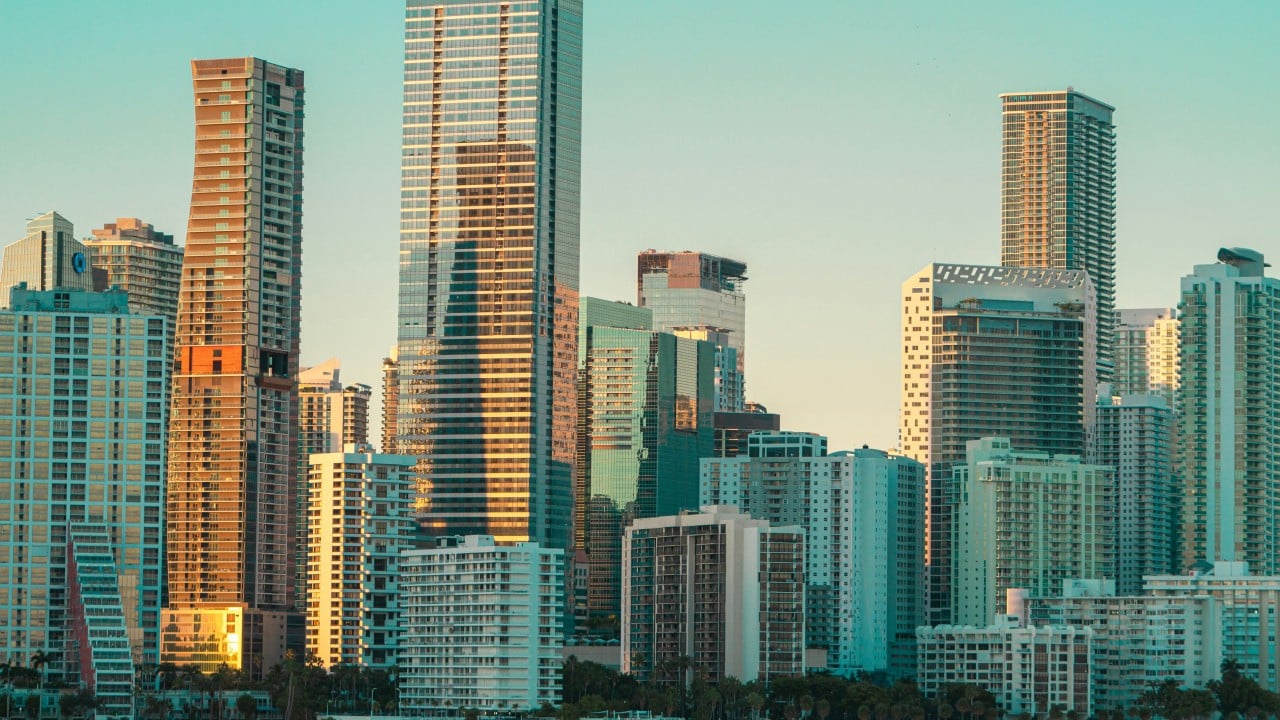
There’s a theory going around that the residential market has split into two markets: one for cash buyers and one for everyone who needs a mortgage. I wanted to see whether the data backs it up. Nationally, the picture is more nuanced than the headline. In Miami, it’s hard to argue with.
Nationally: it’s less about cash and more about who’s still shopping
The surprise is that cash purchases are falling nationwide. All-cash deals made up 27% of existing-home sales in September, down from 30% a year earlier, according to NAR. Redfin puts the peak at close to 35% in 2023.
What changed is who’s still in the market. Realtor.com found that homes under $370,000 now draw 42.8% of online listing views, down from 54.2% in 2021. Engagement with entry-level homes is at its lowest since 2019, while interest at the upper end has held steady.
NAR’s 2026 buyer profile shows the same thing. First-time buyers made up 22% of purchases, near a record low, and their median age is 40. Repeat buyers have a median age of 62, and 30% of them paid cash. They’re using equity built up over the past decade.
Meanwhile, the 30-year fixed rate hit 7.40% in October, up 142 basis points since February. Nationally, the dividing line is less cash versus mortgage and more equity versus no equity.
In Miami, the split is real
Locally, the numbers are much more pronounced:
- 38.3% of Miami-Dade closed sales in September were all-cash, compared with about 27% nationally. For condos, the figure was 49.4%.
- Across South Florida, 60% of sales of $1M and up have been all-cash this year, compared with 42% of all sales.
- Miami-Dade single-family sales of $1M and up rose 25.1% year over year in Q2. Sales of $10M and up jumped 171%, from 21 to 57.
- Miami-Dade recorded 24 sales of $30M and up through September, already above the full-year record set in 2025.
The part nobody is talking about is that the entry level held up. Single-family sales under $600K grew in Q2. The segment that stalled was the $600K to $1M range, which was roughly flat year over year. That’s the move-up buyer: too much house for an entry-level budget, too much mortgage to ignore 7% rates. Since rates rose, single-family sales fell 4.7% year over year in September.
Neighborhood by neighborhood (single-family, Q2 2026)
- Miami Beach: about 74% cash, median price $5.28M
- Pinecrest: about 61% cash, median price $2.5M
- Coral Gables: about 53% cash, median price $2.64M
- South Miami: about 44% cash, median price $1.26M
- Miami-Dade overall: about 27% cash, median price $675K
In Coconut Grove, one local developer recently described “two speed markets racing at the same time.” New luxury product is tight and favors sellers, while older, lower-priced inventory is taking longer to sell and buyers have room to negotiate.
What this means
- For sellers in the luxury tier: Your buyer probably isn’t watching mortgage rates. Price and presentation matter more than the Fed.
- For sellers in the $600K to $1M range: Your buyer is financing. Price for that buyer, and be ready to talk concessions and rate buydowns.
- For financed buyers: You have more leverage than you think, especially in condos, which are carrying 12.3 months of supply.
None of this is permanent. If rates ease, the middle of the market comes back quickly. Until then, Miami is two markets.
So I’ll ask my colleagues: are you seeing this split in your own deals? And for those working the $600K to $1M range, what’s actually getting your financed buyers to the closing table?
Sources:
- NAR / The MortgagePoint: September 2026 existing-home sales
- Redfin: 29% of homebuyers paid cash in March
- Redfin: luxury vs. non-luxury report, May 2026
- Realtor.com: Who is still shopping (via Webull)
- NAR: 2026 Profile of Home Buyers and Sellers
- MIAMI REALTORS: Record $30M+ sales, September 2026
- MIAMI REALTORS: Luxury sales surge, August 2026
- MIAMI REALTORS: Miami-Dade single-family Q2 2026 detail
- MIAMI REALTORS: City-level single-family metrics Q2 2026
- Miami Today: Coconut Grove luxury housing tight, buyers have leverage at lower end
- Corcoran: Miami Beaches & Coastal Mainland 3Q 2026